What is a hybrid cycle? The one-bike answer, explained
What defines a hybrid cycle, how it compares with road, mountain, city and gravel bikes, who it suits, and what to check before you buy one.
Ask a cycle shop for “a bicycle” without any further detail and there is a good chance you will be shown a hybrid cycle. The name tells you the recipe: a blend of road bike and mountain bike, built to do most kinds of ordinary riding well rather than any one kind perfectly. That makes the hybrid the default answer for commuting, fitness rides, errands and weekend paths, and the most common starting point for people returning to cycling after years away.
But “hybrid” is also one of the loosest labels in cycling, stretched across everything from lightweight flat-bar fitness bikes to fully equipped trekking machines, and today to electric hybrid cycles too. This guide explains what actually defines a hybrid, where the design came from, how it compares with the bike types on either side of it, and how to tell whether one is the right cycle for the riding you really do.
What defines a hybrid
Strip a hybrid down and a consistent set of choices appears:
- A flat handlebar. This gives an upright, head-up riding position with the brake levers and gear shifters always in easy reach. It trades aerodynamics for comfort and control in traffic.
- Middling-width tyres, usually on 700C wheels. Wider and more forgiving than a road bike’s narrow rubber, faster-rolling than a mountain bike’s knobbly tread, and happy on both tarmac and firm tracks.
- Mountain-bike-style gearing with bigger chainrings. A wide enough range for hills and loads, without assuming racing fitness. Not sure you need gears at all? See geared or single-speed.
- Brakes that scale with budget. V-brakes on cheaper models, mechanical discs in the middle, hydraulic discs as prices rise.
- Mounts for real life. Almost every hybrid accepts mudguards and a rear rack, which is what turns it from a weekend toy into daily transport.
Some hybrids add a suspension fork or a suspension seatpost. On paper that sounds like extra comfort; in practice, at hybrid prices, suspension mostly adds weight. Many experienced riders suggest putting the same money into better tyres and brakes instead.
Where the hybrid came from
The hybrid emerged in the early 1990s, riding the wave of the mountain bike boom. Riders had discovered they loved the MTB’s upright position and tough, easy-going nature, but most of them never rode anything rougher than a gravel path. The hybrid kept the comfortable posture and durability, swapped the knobbly tyres and heavy frame for something quicker on the road, and quietly became the general-purpose bicycle.
In Germany and the Netherlands the idea went one step further: the trekking bike, essentially a hybrid sold fully equipped with mudguards, a rack, chainguard and often dynamo lighting, became the default adult bicycle. If you picture the classic European city-and-country cycle, you are picturing the hybrid’s closest relation.
The main flavours of hybrid
Because the label is broad, it helps to know the three common interpretations before you shop:
- Fitness or flat-bar road hybrids. Lightweight frames, fairly narrow tyres, a slightly sportier position. Essentially a road bike with a flat bar, aimed at exercise and faster commuting.
- Comfort hybrids. More upright still, sometimes with a suspension fork, a wider saddle and swept-back grips. Aimed at relaxed riding and newer cyclists.
- Trekking or fully equipped hybrids. The European default: mudguards, rack, chaincase and lighting fitted from the factory, built for daily transport in all weather.
All three share the same flat-bar, medium-tyre formula; they differ in how the balance tips between speed, comfort and equipment. Knowing which flavour you are looking at prevents the classic mistake of comparing a fitness hybrid’s price with a trekking bike’s and concluding one is overpriced, when they were never the same bicycle.
Hybrid versus its neighbours
Versus a road bike. A road bike is built for speed: a low, stretched-out position, narrow high-pressure tyres, high gears and minimal accessory mounts. It rewards fitness and smooth tarmac, and punishes neither. A hybrid is slower in a straight line and far more forgiving everywhere else.
Versus a mountain bike. An MTB’s wide knobbly tyres, low gears and suspension are brilliant off-road and draggy on it. Unless your riding genuinely includes rough trails, a hybrid covers the same ground with less effort. If trails are the point, buy the mountain bike.
Versus a city bike. A city bike is the short-distance specialist: sit-upright posture, full accessories, built for trips in normal clothes, often with low-maintenance hub gears. It is heavier and more relaxed than a hybrid. For a two-kilometre commute the city bike wins; for a ten-kilometre one, the hybrid does.
Versus a gravel bike. The gravel bike is the sporty cousin: drop handlebars, light frame, tyres tuned for unsurfaced roads. It covers a hybrid’s territory with more speed and a more bent-over position, usually for more money. Riders who want one bike for fast group rides and rough paths drift towards gravel; riders who want comfort and practicality stay with the hybrid.
Who a hybrid suits, and who should look elsewhere
A hybrid is probably your bike if your riding is a mix: the weekday commute, the Saturday fitness loop, the odd canal path or park track, maybe a child seat or panniers at some point. It is the strongest single answer when you do not yet know which kind of cycling will stick, because it refuses none of them.
Look elsewhere if one type of riding already dominates. Racing or fast club rides point to a road bike. Genuine off-road trails point to a mountain bike. Very short, dressed-up urban trips point to a city bike. And if you know you want assistance, note that the hybrid shape is also the most common base for electric-assist cycles, for exactly the same reasons: the upright position and do-everything brief suit the widest range of riders.
Buying one: the checks that matter
Fit first. A hybrid that is the wrong size will never be comfortable, whatever its spec sheet says. Use the manufacturer’s size chart for your height, then confirm on a test ride that you can stand over the frame and reach the bars without stretching.
Then the contact points. Saddle comfort is personal; plan to swap the saddle if the stock one does not suit you. Grips and pedals are cheap to change.
Then the equipment question. Decide early whether you want mudguards and a rack fitted from day one. Some hybrids arrive fully equipped; on others they are an easy add-on thanks to the frame mounts, but it is cheaper to have them included.
Finally, the test ride. Ride on the surfaces you will actually use. Check that the gears shift cleanly across the range, the brakes feel strong and predictable, and the position feels natural after fifteen minutes, not just fifteen seconds.
Related read
EMotorad’s guide to hybrid electric cycles covers the assisted version of this category and who it suits.
Frequently asked questions
Is a hybrid good for long rides? Yes, within reason. The upright position stays comfortable for hours, and the gearing handles hills and luggage. For regular very long distances, a touring or gravel bike offers more hand positions.
Can a hybrid go off-road? It handles firm tracks, gravel paths and packed dirt comfortably. It is not built for rough, technical trails; that is mountain bike territory.
Is a hybrid the same as a city bike? They overlap, but a city bike is heavier and more relaxed, built for short trips in everyday clothes, while a hybrid is the faster, more versatile option for mixed riding.
Do I need suspension on a hybrid? Usually not. At typical hybrid prices, suspension forks add weight more than comfort. Good tyres at the right pressure do more for ride quality.
Is an electric hybrid worth considering? If you want assistance, the hybrid layout is the most common e-cycle format for good reason: the comfortable position and all-round gearing pair naturally with a motor’s help.
Sources
- Cycling UK, “Which bike should I buy?”: hybrid definition and anatomy, history from the 1990s MTB boom, trekking bikes as the equipped default in Germany and the Netherlands, comparisons with road, MTB, city, touring and gravel bikes, suspension caveats, electric-assist hybrids as the most common e-bike type. https://www.cyclinguk.org/article/which-bike-should-i-buy
- Image: Aliguieri via Pexels, a bicycle touring along a Tuscan river path. Free Pexels licence. https://www.pexels.com/photo/bicycle-touring-along-tuscan-river-path-37129552/
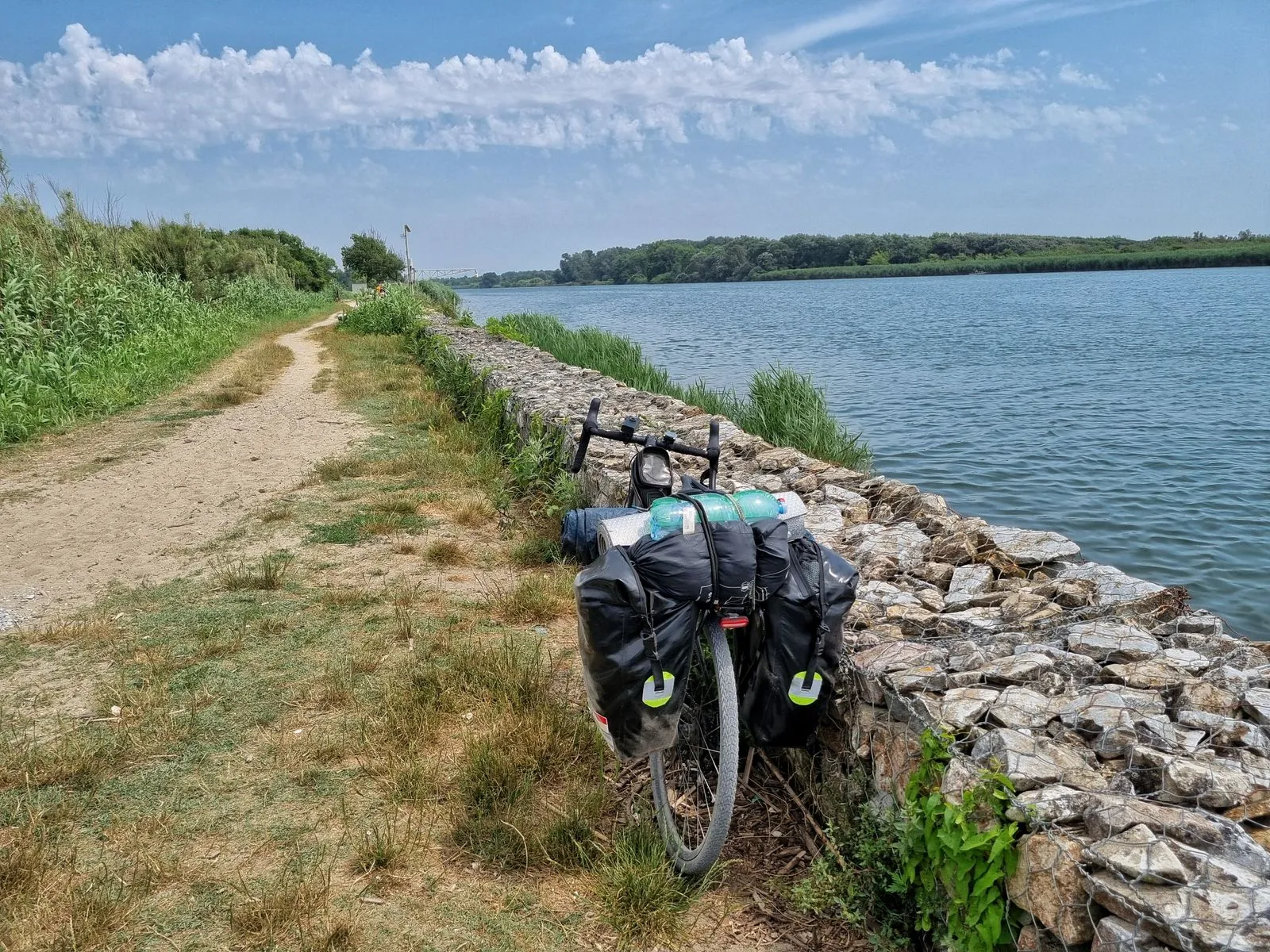
The photo shows a trekking-style touring setup, the hybrid’s fully equipped close relation, on the kind of mixed tarmac-and-track riding this category is built for.