Cycling helmets: how to choose one that actually fits, and when to replace it
A practical cycling helmet guide: what the safety labels mean, how to fit a helmet properly, price versus protection, and when a helmet needs replacing.
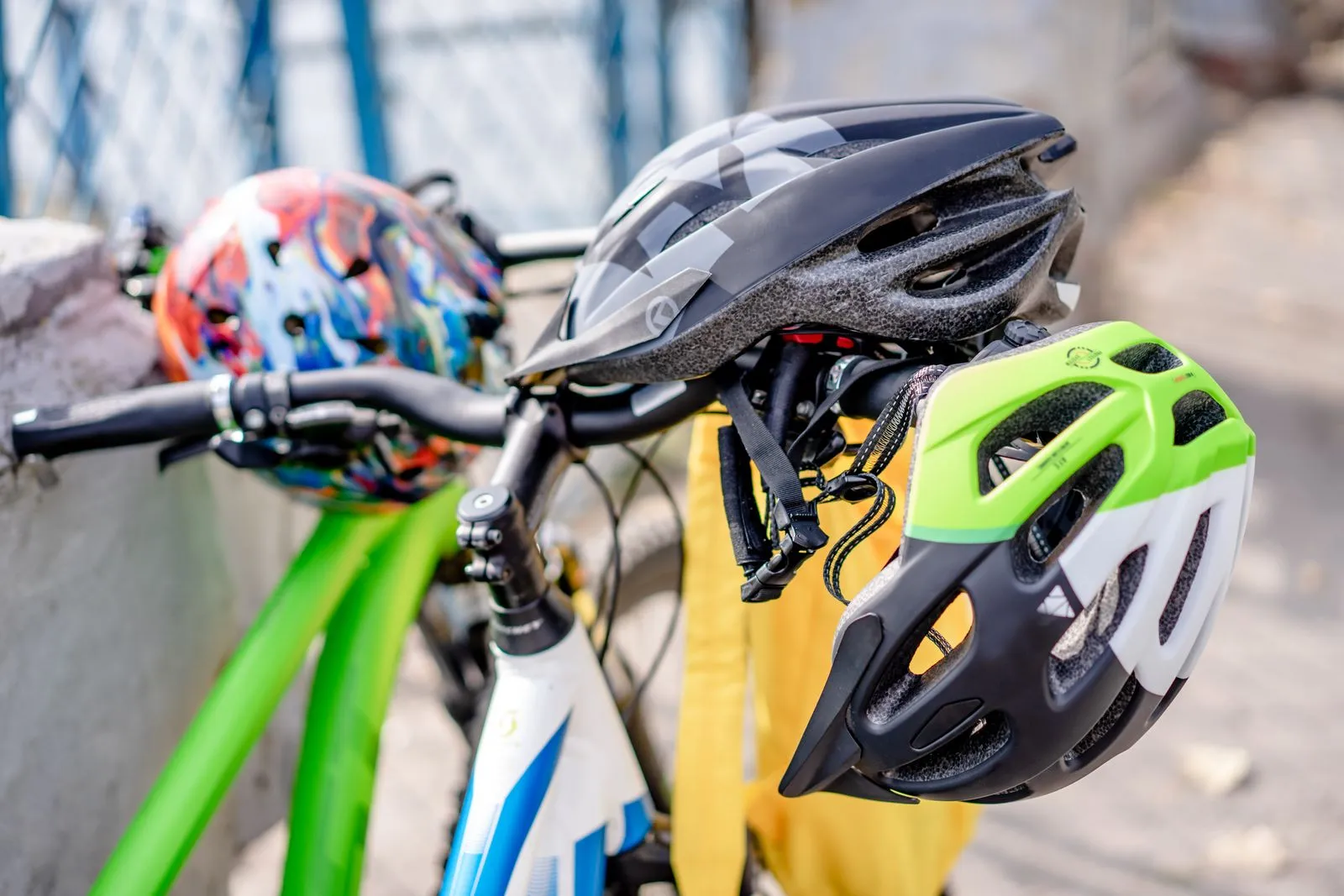
A cycling helmet is a strange purchase: it is the one piece of kit you buy hoping it never does its job. That makes it easy to choose badly, by colour, by price, or by whatever the last rider in the shop picked. The useful questions are narrower: does it meet a real safety standard, does it fit your head rather than someone’s average head, and will you know when it is time to retire it? This guide works through all three. For an India-specific take on the same fit-first approach, EMotorad’s cycle helmet guide covers fit, labels and care.
What a helmet is actually doing
Most bicycle helmets are a layer of crushable foam, usually expanded polystyrene, inside a thin plastic shell. The Bicycle Helmet Safety Institute (BHSI), a volunteer helmet-advocacy group, explains the job plainly: on a sharp impact the foam crushes, and that crushing absorbs energy that would otherwise reach your head. Two consequences follow. First, the foam is single-use: once crushed it does not recover, even if the damage is invisible. Second, the soft pads inside the helmet are for comfort, not protection; the foam and the strap do the work. Whether you ride a regular cycle or an electric cycle, the same helmet rules apply.
You will also see helmets advertising rotational-impact systems such as MIPS. BHSI describes these as claimed to reduce concussion-level energy, and that framing is the honest one: the systems exist, they cost more, and the claims belong to their makers.
The label matters more than the logo
Safety standards for helmets vary by market, and the sticker inside the helmet tells you which one it meets. In the United States, bicycle helmets must meet the Consumer Product Safety Commission’s federal standard (16 CFR Part 1203), which requires helmets to pass tests for impact absorption, strap strength, keeping the helmet on the head in a fall, and not blocking the rider’s vision. BHSI points to ASTM’s F1447 as another established standard and notes that a CPSC sticker is the one to look for on a US-market helmet. Elsewhere the marks differ, so check the label inside the helmet for the standard your market requires rather than assuming one country’s sticker applies everywhere.
Two things no standard certifies: fit and visor behaviour. BHSI is blunt about both. Fit is not certified by any standard, so you test that on your own head, and visors are not tested for snagging or shattering in a fall. A helmet that meets a standard is a floor, not a finish line.
Fit: the part only you can do
BHSI’s fit test is simple enough to run in a shop. A good fit means the helmet sits level on your head, touching all around, comfortably snug but not tight. It should not move more than about an inch in any direction, and with the strap fastened you should not be able to pull or twist it off, however hard you try. The straps hold the helmet on; the rear dial is only a stabiliser.
A few practical points from the same source: the helmet should sit level and cover as much of the head as possible, not tipped back off the forehead; a smoothly rounded shell with no sharp ribs is safer than an aggressive shape, because edges can snag in a slide; and excessive vents mean less foam against your head. It is also worth knowing that the US standard itself requires every helmet to ship with fitting instructions and a picture of the correct way to wear it, and to carry a written warning that the helmet only protects fully when it fits and is worn properly.
Riding an e-cycle changes none of this. Assistance does not remove the need to steer, brake and watch traffic, so it is still a bicycle-helmet decision. Measure your head, read the size chart for the exact model, and treat a seller’s general “it’s safe” claim as meaningless unless it names the standard and the use. If you ride after dark, pair the helmet with good bike lights; being seen is the other half of staying safe.
Types: road, mountain, urban - does the label on the box matter?
Less than the marketing suggests. The differences between a road helmet, a trail helmet and a city helmet are mostly about coverage, vents and visors rather than a different class of protection: a trail helmet typically covers more of the back and sides of the head and often carries a visor, while a road helmet trades coverage for airflow. Pick for the riding you actually do, and for an everyday commute see our guide to choosing a commuter cycle. What matters is that the helmet is intended for cycling at all: a helmet designed for another sport may not have been tested for the way a rider hits the road, so match the helmet to the activity rather than borrowing across sports.
For children the same rules apply with less room for error: check the standard label, fit the helmet to the child’s head now rather than buying a size up to grow into, and redo the fit check as they grow. A helmet that slides around on a small head is decoration.
The fitting mistakes that undo a good helmet
Most real-world failures are boring ones. The helmet tipped back like a cap, leaving the forehead bare. The chinstrap loose enough to fit a fist under, so the helmet leaves the head at the first tumble. A “medium” bought on habit when the tape measure said otherwise. Or a helmet worn over a thick cap or a high ponytail that the fit was never set up for. Five minutes with a mirror and the manufacturer’s instructions fixes all of these, and none of them can be fixed by spending more.
Price versus protection
Here is the finding that should lower your stress: BHSI reports that its limited testing has found most helmets to have about the same impact protection regardless of price, and that a discount helmet can protect just as well if you take the time to fit it carefully. What extra money buys is comfort, ventilation, easier adjustment and lighter weight, things that decide whether you actually wear the helmet every ride, which is its own safety feature. So set a budget you are comfortable with, then spend your energy on the fit rather than the price ladder.
When to replace a helmet
The replace-after-a-crash rule is not marketing. The US standard requires helmets to carry a warning that a helmet which has taken an impact may no longer protect, that the damage may not be visible, and that such a helmet should be returned to the manufacturer or destroyed and replaced. If your helmet has hit the road, its foam may already have done its one job.
Age is the softer question. BHSI notes that most manufacturers recommend replacement after about five years, while adding that research has found uncrashed helmets perform well for longer with reasonable care, so treat the five-year figure as the manufacturer’s guidance, not an expiry date, and inspect rather than guess. Replace the buckle if it cracks or a piece breaks off. And look after the foam between rides: the US label requirements also warn that common cleaners such as ammonia or bleach can damage a helmet in ways you cannot see, so wash it with mild soap and water as the manual says. A regular maintenance routine is a good moment to check the straps and buckle too.
A five-minute shop checklist
- Check the label inside for the safety standard your market requires.
- Measure your head and start from the maker’s size chart, not from small-medium-large habits.
- Fit it level and snug; run the pull-and-twist test with the strap fastened.
- Choose the shape and vents you will happily wear daily over the spec-sheet extras.
- If it ever takes an impact, retire it, and check straps, buckle and shell periodically meanwhile.
The bottom line
A helmet is foam, a strap and a label. Buy the one with a real standard behind it, fit it until you cannot pull it off, wear it every ride, and replace it after any impact. That is the whole job, and it is cheaper than the alternative.
Related read
Fit is the one thing no standard certifies, and EMotorad’s guide to choosing a cycle helmet in India walks through measuring your head, reading size charts and checking the label.
Sources
- US Consumer Product Safety Commission, Bicycle helmets: federal standard requirements, crash-replacement warning (US-specific).
- Bicycle Helmet Safety Institute, Buyer’s guide to bicycle helmets: fit test, price vs protection, replacement guidance.
- Cover photo: Pexels, free Pexels licence.